Minggu, 22 April 2018

Carousel Horses - Paint Your Way

Carousel Horses - Paint Your Way

Image source: https://s-media-cache-ak0.pinimg.com/736x/03/ea/45/03ea45f36426c57d56315769f47f66d7.jpg

Antique carousel horses often sell for thousands of dollars. These beautiful creations large and small are wonderful additions to any collection. Collectors almost will pay any price for the true hand carved horses once displayed on the carousels of yesteryear. Through the miracle of modern technology molds have been produced of these works of art. From these molds grand carousel horses have been recreated. In this article I will show you where to purchase them and guide you through the process.

Anyone with reasonable talent with a paint brush can create an antique reproduction carousel horse. Unpainted or unfinished carousel horse molds can be purchased ready to paint. These molded horses are made of a high density polyethylene which is strong and very forgiving to the finisher. Most of the time the artist is able to make the choice to purchase a horse with seams to sand at a reduced price or choose a ready to paint surface.

Time to create an antique reproduction. Choose the size you desire. Full size, half size or small horses. Full size horses at a full 65 inches high are a very large project. I have seen Elegant Standers and Royal Standers that really do look like the horses we all would ride or stand next to. Half sized unfinished carousel horses are probably the most popular to artists and hobbyist. This size fits real well in baby nurseries and little girls rooms. Most of the horses that I have seen available come complete with the brass pole that runs through the horse.

Let's Get to Painting! There are many ways to finish a carousel horse. Most people like the traditional painted horse that recreates the memory of the Merry Go Round. Some artists are able to locate pictures of actual horses where they are mounted on carousels. Right down to the color of the tail, the picture can be followed to recreate that special horse. Some painters like to reproduce the carved wooden horse effect. Special paints and techniques are available to mimick a real wood surface.One of the last steps is choosing a clear coating to provide a clear shell around the painted finish. Some artists have chosen to take this step a bit further and add multiple coats of gloss creating an almost deep glass effect. Small pictures and material can be added under the gloss to get a desired look.

Creating your own antique carousel horse remake is a very rewarding project. Reproductions horses have sold for hundreds even thousands of dollars. I know of at least two small businesses that have been created finishing and selling these horses.

Caring For Bonsai

Caring For Bonsai

Image source: https://s-media-cache-ak0.pinimg.com/736x/a0/ec/52/a0ec52a58408d647135f5a48dcde10f5--bonsai-trees-for-sale-bonsai-tree-care.jpg

Indoor bonsai requires constant care and attention to establish a rhythm and routine that will not only benefit the plant, but also the grower, whose increasing knowledge and experience will create a stronger awareness of the plant world in general.

Both you and your bonsai tree will benefit if you draw up a routine tree care schedule, such as daily maintenance checks of light, water, temperature and humidity, along with regular feeding, pruning, checking for spider mites, re-potting, etc.

Its easy enough to follow the instructions regarding watering, feeding and pruning, but understanding a little of how a bonsai tree functions will increase your enjoyment of bonsai and give you more confidence for caring for your own trees.

Bonsai root pruning is an important part of the care of bonsai plants. Because the roots are out of site its very easy to overlook the importance of a healthy vigorous root system.

As in the wild, the bonsai root structure provides the anchorage and absorbs moisture and soluble nutrients from the soil. Therefore it is essential to check every day if the bonsai is in need of water.

More often or not when a bonsai begins to look sickly, it because it has some form of root disorder. If the root lacks vigour or is decaying it will not hold the tree firmly in the pot.

For indoor bonsai care, its also a good habit to check the fertilizer and soil in the bonsai pots every day. Baring in mind that the bonsai tree should always be watered before it dries out completely.

But however dry the soil may appear to be, take care not flood it. The soil should be watered slowly, with brief interruptions, to allow for complete permeation.

To guarantee that the watering has been successful you should watch for water seeping out of the drainage hols in the bottom of the bonsai pot. If the soil is too dry, the water will not be absorbed and spill out over the rim of the pot.

Do not spray the bonsai with water. Its far better to use a long spouted watering can, which will reduce the force of the water and promote better permeation to the soil for bonsai.

At the base of the trunk, healthy growing roots show plump and white at the tips. This is the most active part of the root system. Behind the white part, the root is clothed in minute root hairs.

Although water can be absorbed by other parts of the root it is through these tine root hairs that the water and most importantly nutrients are more readily absorbed due to their enormous combined surface area.

Older thicker roots on more mature trees develop bundles of sap conducting cells, which are also present in the trunk and branches. These cells conduct the sugars from the leaves and distribute them to all parts of the bonsai plant, wherever they are need for growth, including the roots.

Every bonsai variety needs a different amount of water; for this reason, as a grower, its in your own interest to familiarise yourself with the type and habits of each individual plant.

A final piece of advise on watering your bonsai. Never use water that is too hot, since this will limit the ability of the plant to absorb the all-important nutrients for healthy new growth.

Sabtu, 21 April 2018

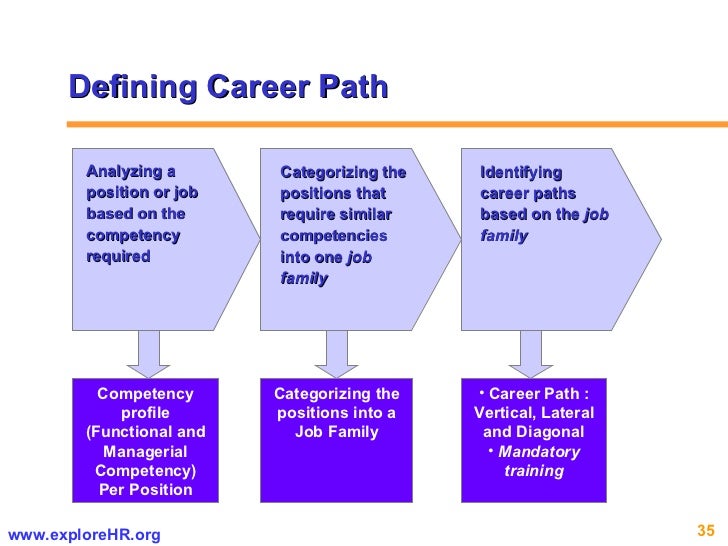
Career Design Identifying and Defining Your Ideal Work

Career Design Identifying and Defining Your Ideal Work

Image source: https://image.slidesharecdn.com/competency-based-hr-management-9641/95/competency-based-hr-management-35-728.jpg?cb=1362103387

Have you ever been involved with an activity and found that the time just flew by that you "lost time" because you became so engrossed in the task at hand? How about an activity that made your energy level soar? Do you have a hobby or some other activity that you do that you find deeply fulfilling because you feel like the work you are doing really "matters" and makes a positive difference in some way?

If you have experienced any or all of the above, you know what it would be like to find work aligned with your life purpose work that you might define as your "calling" or the profession for which you are uniquely and ideally suited. While some people just "know" their ideal profession and calling, most people struggle to define it, often under the pressure to just make a living. Certainly your career goals need to be filtered through the business and economic realities of your life, but with some introspection and analysis, it is very possible to not only make a comfortable living, but to do so in work that is aligned with your true professional calling and life purpose.

The career coaching process to assist people in career design is usually a multi-stage process that involves looking at your values, motivators, interests, knowledge, skills, abilities, experience, and more. While there are validated assessments to help you understand many of these factors, the vast majority of the career design process involves deep thought and introspection. The following questions will get you started:

1. What activities, subjects, causes, and/or hobbies am I passionate about?

2. What activities, subjects, and hobbies did I enjoy doing as a child?

3. When I was a child, what did I imagine I might want to do as a job someday?

4. What activities am I doing when time just seems to fly by for me?

5. What subjects do I enjoy reading about in my spare time?

6. What types of things do I love doing in my spare time?

7. Is there some activity or subject at which I am a "natural"?

8. If I knew there was no way I would fail at it, what activity would I try (or do more of)?

9. What activities, subjects, causes, and/or hobbies do I daydream about?

10. What types of people do I want to be around?

11. In what type of environment do I feel most comfortable?

12. Is there a vision or a cause that you would devote your life to?

Did any themes emerge in your answers to these questions? Even if you haven't precisely defined your ideal career from this exercise, many people find important clues that help lead them on a path that eventually leads to an ideal profession. Don't give up in your pursuit. The feeling of fulfillment and contentment that comes from working in and making a living from a job that is your "calling" is well worth the time and effort.

If you need further support, consider working with a career coach through the interactive process of career design. The best career coaches can help you to connect to your passion and purpose and empower you to manage your own career in a job you love, while still making a comfortable income and living a balanced life.

Career Change For Over 40's

Career Change For Over 40's

Image source: http://static.libsyn.com/p/assets/5/e/b/5/5eb5e66145f15a1d/SCC_PODCAST_IMG_1400x1400.jpeg

Getting back into the workforce or changing careers after the age of 40 can be tricky, especially in this economy, but there is a great deal you can do to improve your chances.

As populations in the developed world are growing older and many countries are experiencing a crisis in the pension system, we are facing the prospect of having to work past the usual retirement age. Yet, at the same time, older people are not always welcomed back into the work force. Many also have difficulty finding a new job if they have an unbroken track record and are simply looking for a change in career after the age of 40.

There are a number of steps you can take to maximize your chances of getting a job, despite the negative views regarding age on the part of some employers.
When writing your CV or rsum, be sure to target it for the job in question. You can do this by highlighting all the skills and experience which are needed for the job and then proving that you have got them.

It is not necessary to put personal information on your rsum - in many countries it is illegal to ask about age so don't feel you have to volunteer your age on your rsum. You should either leave out your date of birth completely or put it at the end. Do not mention your marital status or the number of children you have or their ages. This is not relevant to the job!

The fact that you are older means that you have valuable experience in many areas and you need to make good use of this in your application. Don't worry if you are returning to work after bringing up children - soft skills, such as communication, time management and the ability to meet deadlines are crucial in the workplace today and all of those will be skills you have developed in the intervening years. So take a good look at all the skills you have acquired both at work and in other areas of life and make a list. You'll be surprised to see how many you have and how many of them are transferable.

If you find your particular career favors youth, consider the possibility of self-employment. Could you use your existing skills as a freelancer? If your computer skills aren't up to date, get your kids to teach you or find out about local classes, which are sometimes free. If there have been changes in your particular industry, look into refresher courses.

Many people make the mistake of assuming that they will get job satisfaction in one place, but this is the exception rather than the rule. So make a list of all the skills you'd like to use (or learn) at work and a list of the tasks which give you job satisfaction. Then consider the possibility of becoming a portfolio worker, that is, someone who has more than one occupation. You might, for example, work as a freelancer in your existing career for two or three days a week and set up a small business doing something completely different during the rest of the week. Or you might write about, teach or run workshops in one of the skills you have developed.

This doesn't have to be work-related - it could be a hobby you've been interested in for years, it could be a hobby you're passionate about. Look at everything you've done in your life so far and you'll find that there are several areas in which you are an expert.
If you are prepared to look beyond the conventional 9-5 job, you will find that there are many opportunities open to you, regardless of your age.

Care of Bonsai Trees - Don't Be Fooled Into Buying Bonsai Tree Seeds!

Care of Bonsai Trees - Don't Be Fooled Into Buying Bonsai Tree Seeds!

Image source: https://s-media-cache-ak0.pinimg.com/736x/0e/20/c6/0e20c68525286b14d8044ff4d72abff4.jpg

A word of warning before I talk to you about the care of bonsai trees - don't be fooled into buying bonsai tree seeds. Despite the fact I have seen bonsai seeds offered for sale, there is no such thing.

A bonsai is a work of art, not any particular kind of tree. They are simply ordinary trees that are miniaturized by being potted and having their roots and branches trimmed to prevent them growing to full height. The branches are also "trained" to grow into aesthetic shapes. Almost any perennial, woody stemmed tree will do and, if you're growing them from seed, normal seed will do.

However growing any tree from seed is a slow process and if you really want to get started on bonsai growing as a hobby it is best to buy a very young plant or even better, one that has already been potted and trimmed as a bonsai. Once you have your tree at home you will need to know the few easy steps on the care of bonsai trees to keep it healthy and growing in just the right shape.

It is not difficult to grow a bonsai, but, if you don't know what you are doing, things can go wrong very quickly.

Proper care of bonsai trees, like any plant, involves providing just the right amount of water, food and light. The exact amount will depend on the type of tree you have in your pot. Is it a tree that likes dry, desert conditions? More bonsai probably drown from being over-watered than under-watered. However bonsais are often kept indoors, when the plant itself would prefer to be outdoors. The air inside our houses is often very dry, so one little trick to help your bonsai is too spray the leaves with a gentle mist to create a more natural, humid environment.

Like all plants, bonsais also need regular feeding. The pot your bonsai is growing in is its micro-world. Its roots cannot search beyond the bounds of the pot for fresh nutrients which is why your bonsai needs regular feeding. But here's another warning in your care of bonsai trees - like the watering, you don't want to over do it and kill your tree with kindness.

All plants need light - and bonsais generally like plenty of it, but how much is the right amount for your bonsai depends on the type of tree it is. If you're keeping your bonsai inside it is a good idea to turn it regularly so all sides of the tree get a dose. If you maintain the same position all the time you may find your tree grows towards the light source.

Long-term care of bonsai trees involves pruning of both the roots and branches and training of the trunk and branches to grow into the desired shape. There are five basic bonsai styles - formal upright, informal upright, cascade and semi-cascade, and the windswept, slanting look. It is easiest to start with a tree that is showing a natural tendency to grow into the shape your desire.

As I stated at the beginning, a bonsai is a work of art. It should be pleasing to the eye and tug at the soul. That sounds rather grand and perhaps a little scary for someone who has little or no experience in the care of bonsai trees. However, once you know a few simple techniques it is an enjoyable and relatively easy hobby and there's plenty of help available.

Jumat, 20 April 2018

Candle Wick Secrets To Better Burning Candles

Candle Wick Secrets To Better Burning Candles

Image source: https://i.kinja-img.com/gawker-media/image/upload/s--52wDbycn--/c_scale,fl_progressive,q_80,w_800/jrftbcfytzuwi2nufip0.jpg

How to make candles burn better might seem like a mystery but knowing how to do it is not rocket science. You just need to know how. Choosing the right kind of candle wick is important. The right size of wick should also be considered as there are candle wicks for votive candles, tea lights, and different size containers.
To determine the size of the wick, you should not base it on the height of the candle but on the width of the candle container. The basic principle is that the size of the container should be directly proportional to the size of the wick. Therefore, a wider container should have a thicker wick.

The relationship between wick size and flame size is not complicated. Because thin candle wicks absorb less liquid wax, it will produce less vapor fuel resulting in a smaller flame. Take note of this relationship when you have a wide container. An evenly distributed burn circumference going into the edge of a wide container is produced by a larger flame.

There are several important things that you need to remember when buying your candle wick.
First, it should be marked with the suggested candle container size. If there are no markings, just do a comparison of the several options that you can see. The thickest wicks should be used for containers in excess of 3.5 inches wide
For medium-sized wicks, the ideal container should be between 2.5 and 3.5 inches wide. For candle jars that are less than 2 inches, a thinner wick would be fine. However, there is no rule that you cannot use thicker wicks in smaller jars. The only downside is that it will burn off the candle wax much faster.

Another important factor to consider regardless of the wick size or container you use is perfecting the art of centering the wick. Here"s a short procedure that you can use as a guide:

1.Put the candle wick on the center of the jar. Some suppliers place a center marker at the jar that you can use as the reference point.
2.While pouring and while the candle making wax cures, use a popsicle stick that has a small hole in the middle to hold the candle wick.

So there you have it. The tricks are pretty simple to implement using the proper candle making kit like candle wick. With this knowledge, you"ll be able to make candles that burn better.

Can You Teach An Old Dog New Tricks

Can You Teach An Old Dog New Tricks

Image source: https://image.slidesharecdn.com/youcantteachanolddognewtricks-160226160057/95/you-cant-teach-an-old-dog-new-tricks-22-638.jpg?cb=1456502477

You cant teach an old dog a new trick,

If you always do what youve always done, then youll always get what youve always got!

In other words, if you want to train a dog, no matter his age, to do something new, then you need to do something different while training him.

And you know what?

If you use the right approach, it will work!

Yet, unfortunately, when humans just repeat the same old actions to training a dog, and the dog fails to learn, we quickly label the dog stupid or too old to learn, which is simply not true.

So, can you teach an old dog a new trick?

Yes. Absolutely. But it starts with you and me!

Ready to discover how to teach an old dog a new trick?

Here are some basic tips for training a dog to learn a new behaviour

1. Establish yourself as the decision maker.

If your dog takes no notice of you when you ask him to follow a command, its vital to establish that you are the decision maker first, before you begin training.
Why?
Because establishing yourself as the decision maker enables your dog to trust you. When he trusts you, hell be more likely to do something when you ask him to do it.
Its just like having a child. If your child looks up to you because she knows you make decisions for her that will keep her safe and happy, she will be more likely to listen to you when you ask her to do something.

A great example would be keeping your child safe while cooking. If you tell your child not to touch a hot stove top because it will hurt her, and the child trusts you, chances are shell take your warning and directions seriously.

If the child couldnt care less about what you have to say and she doesnt trust you, theres a good chance shell touch the burning stove top because she thinks she knows whats best.
Always make sure your dog knows youre the ultimate decision maker.

2. Dont lose control of the environment.

While teaching your dog a new command, its so important to ensure the environment youre teaching in is a controlled setting. Its up to you to help your dog make the right decision.
For example, you may have a dog that charges out the front door and runs up and down the picket fence barking at people.

You dont like this behaviour, so you want to train your dog to not run out the door and bark.
Despite the fact you want to change this behavior, its summer outside, and you want to leave your doors open to let the fresh air into your home.
So, in this case, Id install a baby gate just inside the door to help motivate your dog to make the right decision and stay inside, despite the fact that he wants to bark at people along the fence.

That baby gate will often make all the difference to the training pattern.
And over time, hell learn that he is not allowed to rush out the door without your permission.
Keeping control of the environment may mean keeping your dog on a long line or leash or putting a gate up in your home. Do whatever you need to do to keep control of your dog while you are teaching a behaviour.
Back to the parent/child analogyits like holding a toddlers hand as you walk through a busy parking lot.
Holding your kids hand is taking control of the environment, and it ensures that your kid wont do something silly like run out in front of a car because she wasnt paying attention.
While youre holding your kids hand, you begin to teach her that its important to walk slowly through a parking lot, to look for cars and to always look both ways before walking across a street.

This is how practically controlling the environment allows you to train your dog (and your child) while also keeping them safe.

3. Remember your dog is trying to avoid pain and gain pleasure!

Im a firm believer than we need to do more than just bribe and train our dogs with food and treats while training; however, they can certainly motivate a dog to learn a new skill.
So use treats and then fade them out later over time as your dog gets the hang of the new action.
Also keep in mind that different foods may motivate different behaviours. spelling
To a dog, a piece of kibble is like 10 cents.
Then a big dry biscuit is like a dollar to your dog.

And if you take it a step further, a piece of cheese or bacon is like $100 dollars.
And what your dog may do for $100, he may not do for 1o cents.
(Maybe we are not so different after all!)
For example, if your dog escapes and gets out of the house, a piece of kibble may not be enough to make him listen and come back to you. Yet, Im sure a shake of the tasty treat tin will grab his attention and motivate him to come back inside.

4. Start small and set your dog up to win.

We should always be looking for ways to set up our dogs to win when they are being trained.
For example, if youre trying to break the habit of your dog raiding your garbage bin, its no good leaving the leftover lamb chop bones in the trash.
Its just too tempting for your dog, especially when he has not learned that the trash is off limits for him.
Make it easy and keep it simple when you are starting out.

5. Finish on a high and exercise regularly!

Always end your training session on a high note.
This may even be as simple as ending your training session on a basic recall or finishing the walk with a treat when they come and jump up into the car. When you do this, you always leave a training session feeling happy, and the dog youre working with finishes a session feeling confident and willing to learn.

So, can you teach an old dog a new trick? Follow my 5-step method above, and the answer is YES!
But what about you?
Are you too old to learn a new skill or try out a new career path?
Listen to this
My amazing dad, alongside my nephew and me, just climbed Ben Nevis, the highest mountain in the UK!
He climbed up and down in a single day! And hes 70!

You are never too old or too young to start something new! Age is simply a number. What really counts is what you believe and feel.

In the words of Henry Ford, Whether you think you can or whether you think you cant, youre right.

So if youve been reading some of the latest posts and have been thinking about becoming a dog trainer but arent sure if you can do itchoose the empowering belief that you can!

Whether its as a full-time or part-time job, as a hobby or as an extra income to supplement your current salary, believe, and it can come true.

And when it comes to your dog its trueold dogs can learn new tricks!

Dogs can change. The question is, can YOU?

Extreme Water Sports That Will Get Your Adrenaline Pumping

Image source: https://s3-ap-southeast-1.amazonaws.com/silverkris-dev/steven/sph142/wp-content/uploads/2016/10/21093501/0706-extremenz-bungy-...